Avoiding a movie-prop display around a historical reference: Thompson-style miniatures
By MiniatureArsenal Editorial
Published
A Thompson-style miniature can be presented as design history without surrounding it with cinematic props that imply a screen-used connection. Let the object and its verified record carry the story.
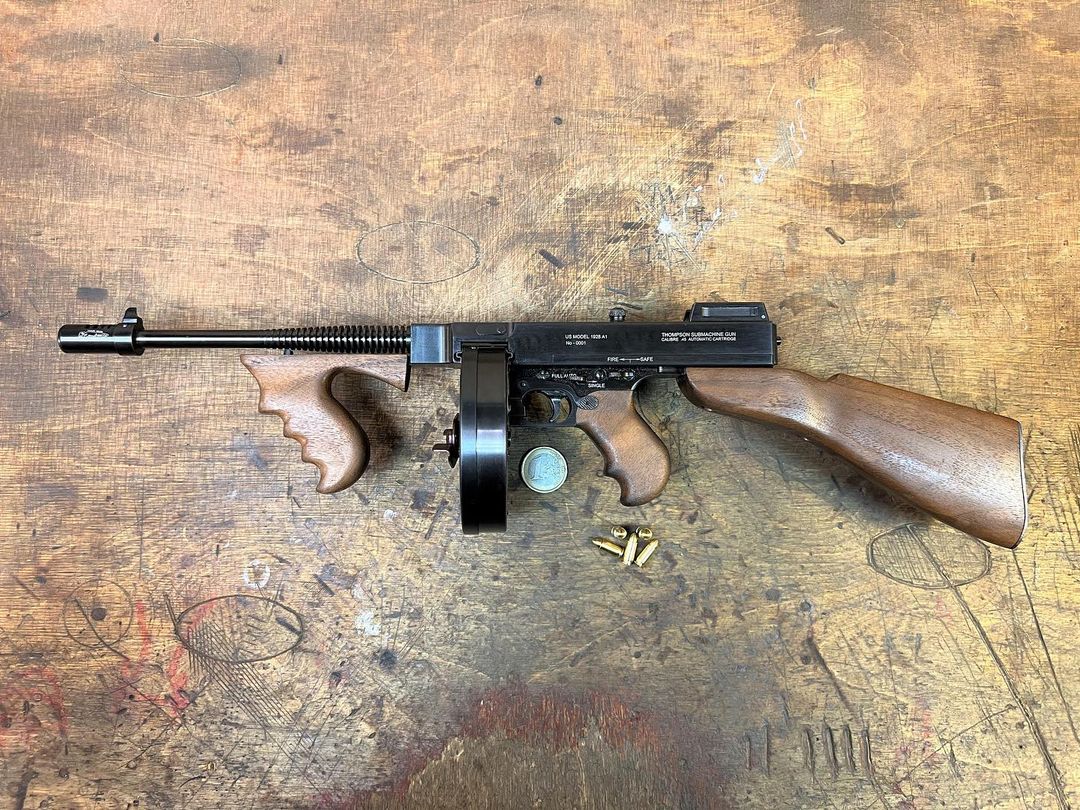
A display of Thompson-style miniatures should help viewers read the object, not make them work around its stand, label or background. The model-specific note identifies the main presentation problem. The next step is to solve that problem using measured space, restrained context and photographs that keep physical size clear. This is an exhibition-planning exercise, not a method for operating the model.
Avoiding a movie-prop display around a historical reference
A Thompson-style miniature can be presented as design history without surrounding it with cinematic props that imply a screen-used connection. Let the object and its verified record carry the story. A clear side view and one close detail image are often enough. If cultural references are discussed, keep them separate from claims about the origin of the miniature itself.
Plan the outline and the negative space
Draw a rough display plan and mark the areas needed to keep substantial receiver silhouette readable. Check whether the support conceals recognizable stock and fore-end treatment or whether a label crowds configuration-dependent magazine shape. Leave space around the silhouette rather than filling every gap with a prop. Use actual object measurements for the plan; a catalog close-up is not a reliable indication of the display footprint.
Let photographs do a different job from the object
The physical miniature communicates size and presence. An enlargement communicates detail. Label the enlargement clearly and avoid letting it substitute for measured dimensions. Keep one overall photograph for context and one detail view only when it explains something important. A decorative crop that removes the key silhouette can be visually appealing while being poor evidence for future study.
Keep presentation changes reversible
Use a stable display arrangement that does not require altering the miniature. Avoid unsupported cleaning or surface-treatment experiments merely to improve a photograph. Keep the object away from obvious environmental stresses and seek object-specific conservation advice when its materials or condition are uncertain. Document the arrangement so a later comparison can distinguish a change in presentation from a change in the miniature itself.
Notebook checklist
- Measure the actual object and available shelf space.
- Keep the main reference cues clear of supports.
- Identify photographic enlargement separately from scale.
- Preserve original record images alongside display crops.
About the illustration
The image is a MiniatureArsenal catalog photograph labeled “Tommy Gun”. It illustrates the reference discussion; it does not independently verify maker, material, scale or firing capability. The article analyzes collecting evidence rather than certifying the object.