What a small scale contributes to a focused collection: One-fifth-scale UZI-style miniatures
By MiniatureArsenal Editorial
Published
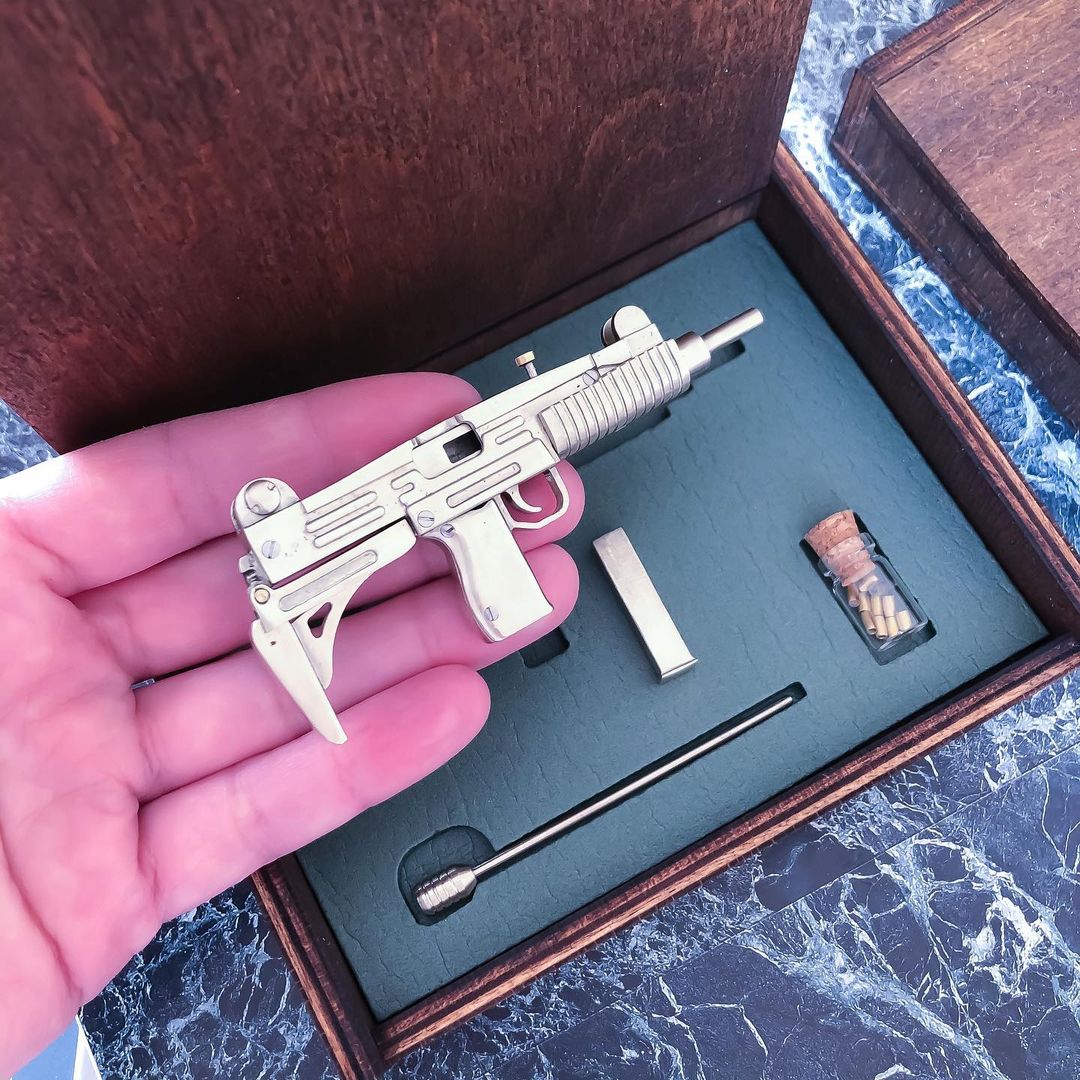
An UZI-style model described as one-fifth scale offers a different study experience from a larger representation of the same reference. Fine detail may be harder to read, while the compact overall silhouette remains prominent.
A collector's choice is most useful when it explains the role of an object rather than announcing a universal winner. One-fifth-scale UZI-style miniatures can be approached as a reference-design study: what does this shape help a viewer understand, and what would remain unclear without a label? This article treats selection as curation, not as a performance ranking or an acquisition recommendation.
What a small scale contributes to a focused collection
An UZI-style model described as one-fifth scale offers a different study experience from a larger representation of the same reference. Fine detail may be harder to read, while the compact overall silhouette remains prominent. A collection can compare the effect of reduction without assuming that smaller means rarer, more difficult to make or more mechanically complete.
A collection question, not a popularity contest
Begin with the question in the model-specific note above. A cabinet organized around that question will usually be clearer than one organized only around famous names. The three reference cues to consider here are compact receiver block, grip-centered silhouette, very small stock detail. They are interpretive starting points, not a certification that every depicted feature is faithfully or functionally reproduced. Compare them using the actual catalog photograph and record where the evidence remains incomplete.
Write the label before choosing the arrangement
Try drafting a short interpretive label that distinguishes the miniature object from its intended full-size reference. If the label relies on claims about rarity, national origin, maker, material or performance that you cannot support, revise it. A strong collection argument explains the visible design and the available evidence. It can also explain an unresolved attribution without treating uncertainty as a flaw.
A practical curation exercise
Sketch a three-object display with this miniature as the comparison point. Assign each neighboring object a different question, such as proportion, chronology or reference-family identification. Keep actual miniature sizes visible rather than implying that all pieces share one scale. Then remove any prop or sentence that does not help answer the main question. The resulting display should make the object easier to study.
Notebook checklist
- State one design question the object helps explain.
- Separate reference identity from miniature maker and date.
- Keep scale differences visible in a comparison.
- Avoid unsupported rarity, investment or capability claims.
About the illustration
The image is a MiniatureArsenal catalog photograph labeled “1:5 scale UZI”. It illustrates the reference discussion; it does not independently verify maker, material, scale or firing capability. The article analyzes collecting evidence rather than certifying the object.