Preserving a technical-sounding title without endorsing it: MCX-style miniatures
By MiniatureArsenal Editorial
Published
SBR and MCX are catalog terms that should be recorded accurately, but they do not by themselves settle a miniature legal classification or exact reference configuration. Separate supplied wording, observed shape and verified documentation.
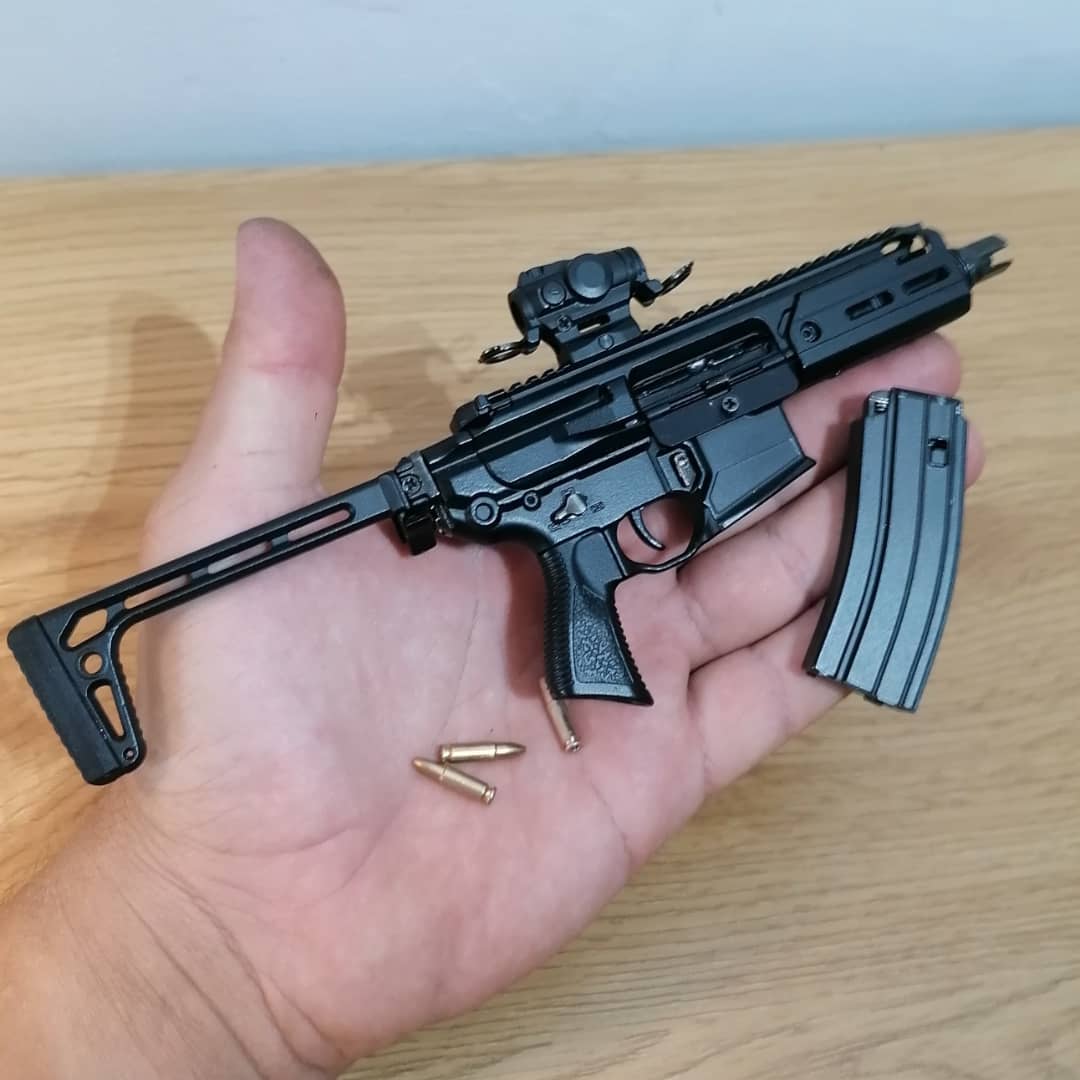
The catalog photograph associated with MCX-style miniatures is useful evidence, but a collection record needs more than a recognizable shape. A supplied name, an inferred historical reference and a verified miniature maker are different kinds of information. The model-specific note below identifies the attribution problem. The following record structure keeps that problem visible without making the object difficult to describe.
Preserving a technical-sounding title without endorsing it
SBR and MCX are catalog terms that should be recorded accurately, but they do not by themselves settle a miniature legal classification or exact reference configuration. Separate supplied wording, observed shape and verified documentation. This keeps later research possible and prevents a technical-sounding name from becoming an unsupported claim about the particular object or its origin.
Keep the source wording and your interpretation separate
Store the original catalog title exactly as supplied. In another field, describe the intended reference and the evidence for that interpretation. Here, useful comparison cues include modern modular-looking rifle outline, distinct fore-end treatment, stock-dependent compact profile. Do not silently rewrite a mixed or ambiguous title into a precise historical identity. A later correction should add to the source trail instead of replacing it.
Build a record that another person can audit
Include dated overall photographs, measured exterior dimensions, supplied papers and any clearly visible maker information. Distinguish the date a reference design belongs to from the date the miniature was produced. If a production date or maker remains unknown, say so. Evidence that belongs to a full-size reference cannot fill a gap in the miniature provenance simply because the names match.
Make revisions explicit
When new information changes the attribution, record the previous description, the new description and the reason for the change. Keep the original image and wording recoverable. This matters when a collection moves between owners or is photographed for publication: a confident but unsupported caption can otherwise become the apparent source for later claims. A transparent research history is more valuable than an artificially complete inventory.
Notebook checklist
- Preserve exact catalog wording and original imagery.
- Distinguish reference date from miniature production date.
- Keep maker, scale and capability evidence in separate fields.
- Record identification revisions and their sources.
About the illustration
The image is a MiniatureArsenal catalog photograph labeled “SBR SigSauer MCX”. It illustrates the reference discussion; it does not independently verify maker, material, scale or firing capability. The article analyzes collecting evidence rather than certifying the object.