Presenting a long pistol silhouette clearly: Beretta 92FS-style miniatures
By MiniatureArsenal Editorial
Published
The relatively extended pistol profile needs room in front of the grip and behind the upper section. A tight crop can make the miniature appear less balanced than it is.
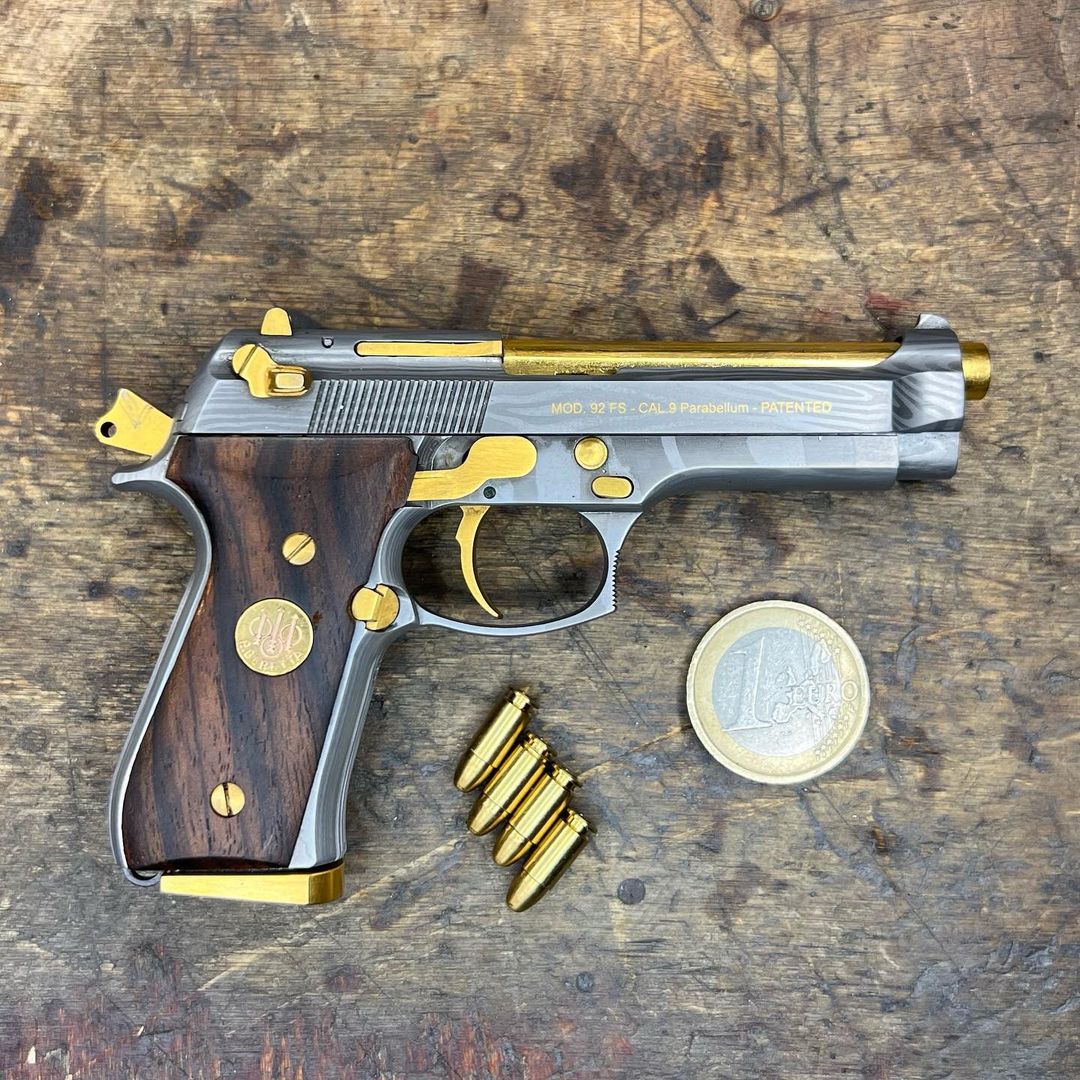
A display of Beretta 92FS-style miniatures should help viewers read the object, not make them work around its stand, label or background. The model-specific note identifies the main presentation problem. The next step is to solve that problem using measured space, restrained context and photographs that keep physical size clear. This is an exhibition-planning exercise, not a method for operating the model.
Presenting a long pistol silhouette clearly
The relatively extended pistol profile needs room in front of the grip and behind the upper section. A tight crop can make the miniature appear less balanced than it is. Use a simple background and a support that does not hide the frame boundary. A secondary detail image can explain the upper profile while the main display preserves the complete outline.
Plan the outline and the negative space
Draw a rough display plan and mark the areas needed to keep open-looking upper reference profile readable. Check whether the support conceals long pistol frame outline or whether a label crowds rounded grip treatment. Leave space around the silhouette rather than filling every gap with a prop. Use actual object measurements for the plan; a catalog close-up is not a reliable indication of the display footprint.
Let photographs do a different job from the object
The physical miniature communicates size and presence. An enlargement communicates detail. Label the enlargement clearly and avoid letting it substitute for measured dimensions. Keep one overall photograph for context and one detail view only when it explains something important. A decorative crop that removes the key silhouette can be visually appealing while being poor evidence for future study.
Keep presentation changes reversible
Use a stable display arrangement that does not require altering the miniature. Avoid unsupported cleaning or surface-treatment experiments merely to improve a photograph. Keep the object away from obvious environmental stresses and seek object-specific conservation advice when its materials or condition are uncertain. Document the arrangement so a later comparison can distinguish a change in presentation from a change in the miniature itself.
Notebook checklist
- Measure the actual object and available shelf space.
- Keep the main reference cues clear of supports.
- Identify photographic enlargement separately from scale.
- Preserve original record images alongside display crops.
About the illustration
The image is a MiniatureArsenal catalog photograph labeled “Beretta 92FS”. It illustrates the reference discussion; it does not independently verify maker, material, scale or firing capability. The article analyzes collecting evidence rather than certifying the object.