Reading the upper outline without confusing shadow and detail: Beretta 92FS-style miniatures
By MiniatureArsenal Editorial
Published
The historical reference is known for a distinctive open-looking upper profile. On a miniature, lighting and simplified geometry may change how that feature reads.
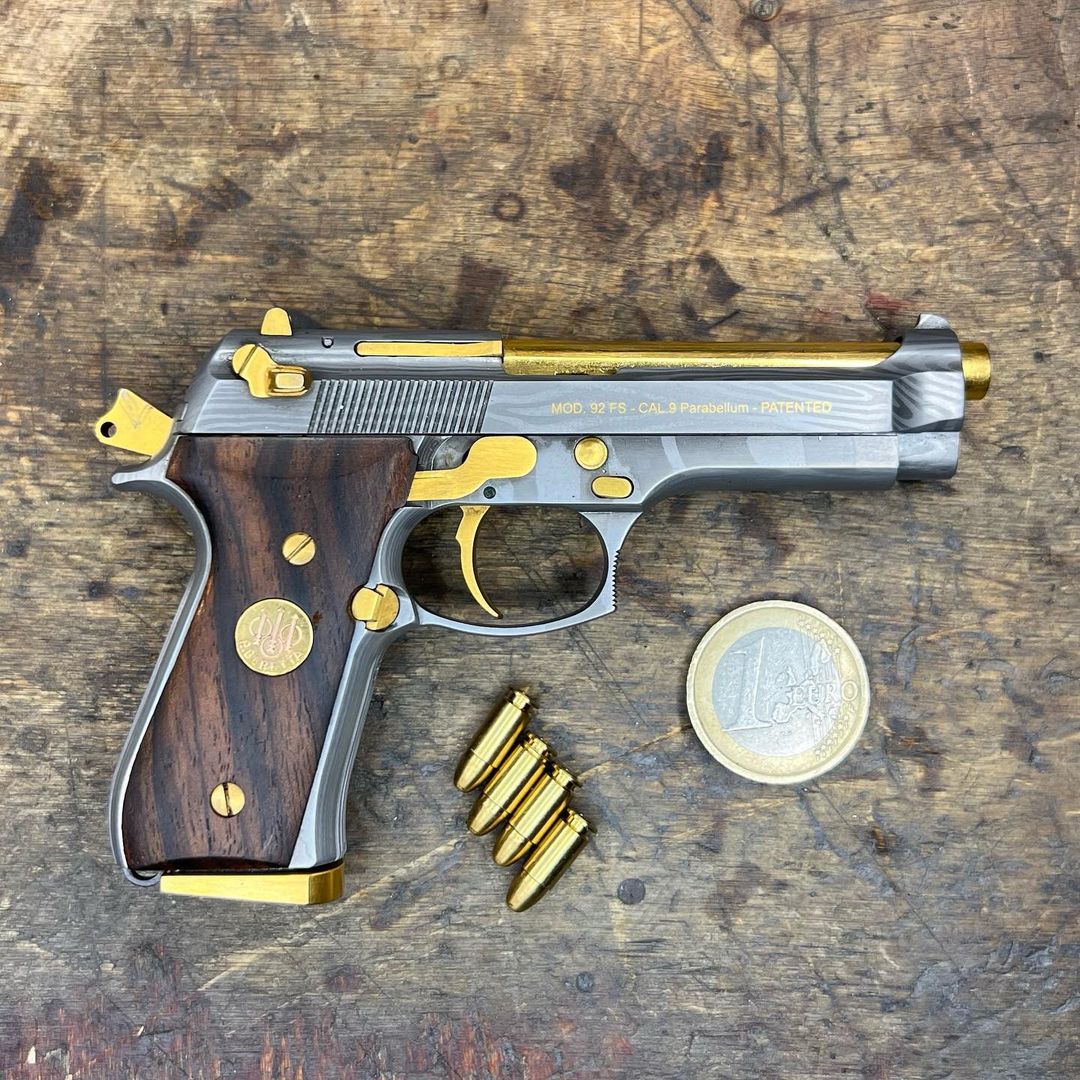
The outline of Beretta 92FS-style miniatures is a better starting point than a list of impressive-sounding features. Photographs can support a discussion of visible form, but they do not establish internal construction or operation. The aim here is to make the model-specific observation useful to a collector who wants to understand representation, proportion and the limits of an image.
Reading the upper outline without confusing shadow and detail
The historical reference is known for a distinctive open-looking upper profile. On a miniature, lighting and simplified geometry may change how that feature reads. Examine clear side and oblique images before making an identification claim. Record visible boundaries directly, and avoid interpreting a dark patch as a mechanical opening when the photograph does not establish it.
Move from the whole outline to individual features
First identify open-looking upper reference profile. Then compare it with long pistol frame outline and rounded grip treatment. Do these elements read as one coherent representation, or does the camera angle make one seem disproportionately large? Record the image angle before judging the object. A broad shape comparison should come before tiny lettering, decorative lines or finish effects that can distract from the underlying proportions.
Separate observation, interpretation and verification
Use three columns in the notebook. Observation records what the image clearly shows. Interpretation records which reference family that evidence suggests. Verification records what a reliable document establishes about the miniature. A familiar shape can support an interpretation without verifying a maker or mechanical feature. Keeping these columns separate makes it easier to revise a conclusion when a better photograph or document appears.
Compare images without altering the evidence
Retain the original catalog image alongside any display crop. A close-up may reveal detail while concealing context, and strong perspective can change apparent proportions. If the object is available for a controlled photograph, include the entire silhouette and a neutral size reference. Do not infer exact dimensions, material composition or miniature function from a single attractive image. A useful visual study leaves those unsupported questions open.
Notebook checklist
- Retain a complete silhouette image.
- Note angle, crop and lighting conditions.
- Record visible evidence before reference interpretation.
- Do not use a realistic exterior as proof of function.
About the illustration
The image is a MiniatureArsenal catalog photograph labeled “Beretta 92FS”. It illustrates the reference discussion; it does not independently verify maker, material, scale or firing capability. The article analyzes collecting evidence rather than certifying the object.