Specific reference words require specific evidence: Artillery Luger-style miniatures
By MiniatureArsenal Editorial
Published
Artillery and Parabellum are useful catalog terms but do not automatically establish a precise variant or authentic historical configuration. Preserve the seller wording and photographs, then compare the visible reference features carefully.
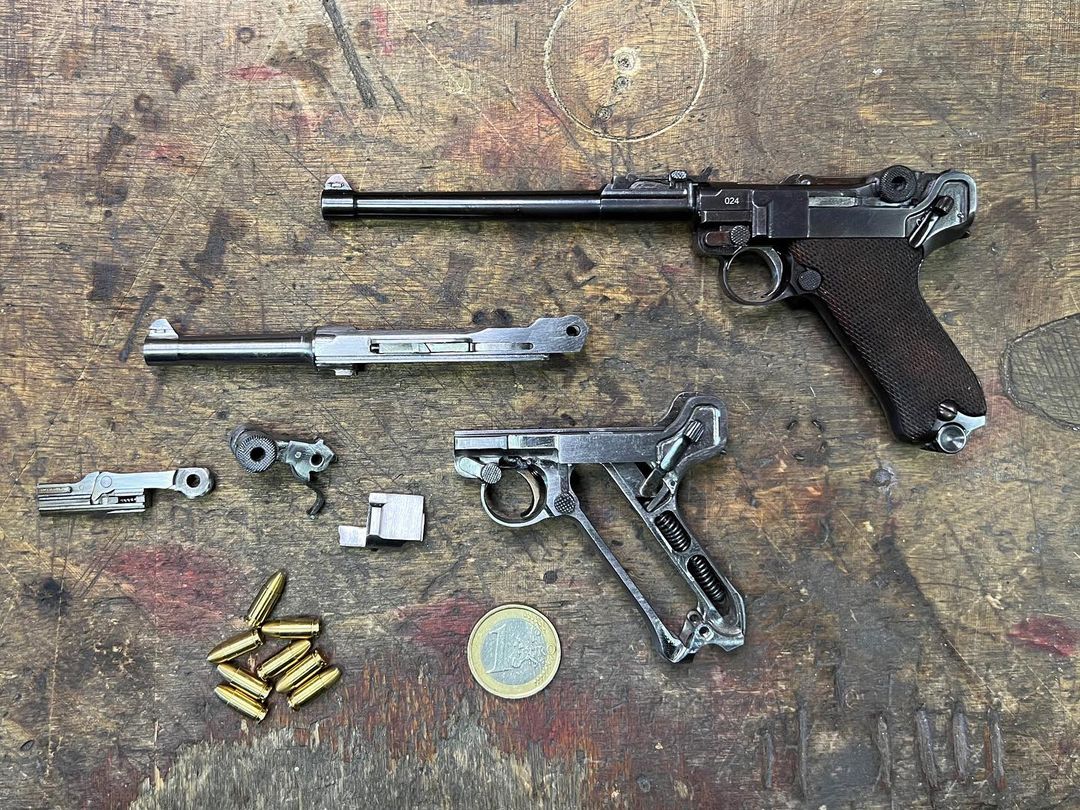
The catalog photograph associated with Artillery Luger-style miniatures is useful evidence, but a collection record needs more than a recognizable shape. A supplied name, an inferred historical reference and a verified miniature maker are different kinds of information. The model-specific note below identifies the attribution problem. The following record structure keeps that problem visible without making the object difficult to describe.
Specific reference words require specific evidence
Artillery and Parabellum are useful catalog terms but do not automatically establish a precise variant or authentic historical configuration. Preserve the seller wording and photographs, then compare the visible reference features carefully. Record any supplied miniature maker information separately. A researchable label can retain a cautious style description until stronger evidence supports a narrower identification.
Keep the source wording and your interpretation separate
Store the original catalog title exactly as supplied. In another field, describe the intended reference and the evidence for that interpretation. Here, useful comparison cues include angled grip profile, extended pistol barrel line, distinctive upper toggle-like outline. Do not silently rewrite a mixed or ambiguous title into a precise historical identity. A later correction should add to the source trail instead of replacing it.
Build a record that another person can audit
Include dated overall photographs, measured exterior dimensions, supplied papers and any clearly visible maker information. Distinguish the date a reference design belongs to from the date the miniature was produced. If a production date or maker remains unknown, say so. Evidence that belongs to a full-size reference cannot fill a gap in the miniature provenance simply because the names match.
Make revisions explicit
When new information changes the attribution, record the previous description, the new description and the reason for the change. Keep the original image and wording recoverable. This matters when a collection moves between owners or is photographed for publication: a confident but unsupported caption can otherwise become the apparent source for later claims. A transparent research history is more valuable than an artificially complete inventory.
Notebook checklist
- Preserve exact catalog wording and original imagery.
- Distinguish reference date from miniature production date.
- Keep maker, scale and capability evidence in separate fields.
- Record identification revisions and their sources.
About the illustration
The image is a MiniatureArsenal catalog photograph labeled “luger parabellum artillery”. It illustrates the reference discussion; it does not independently verify maker, material, scale or firing capability. The article analyzes collecting evidence rather than certifying the object.